Puzzle: Which Glass Will Be Filled First?
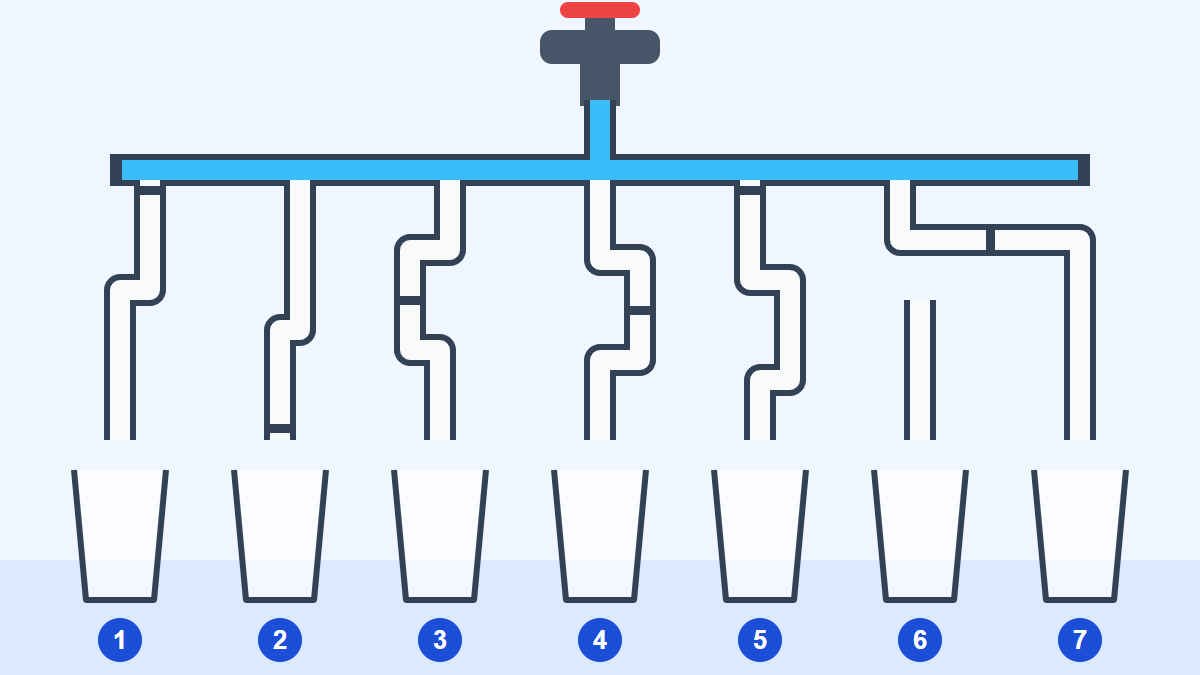
At first glance, this puzzle looks simple: several glasses connected by pipes, water flowing in, and one question—which glass fills first? But like many visual riddles, the obvious answer is usually wrong, especially if you decide too quickly.
A Puzzle That Tricks Your Brain
These challenges work because our brains want to solve things fast. When we see a network of pipes and glasses, we instinctively trace the water’s path and guess where it will arrive first. The instructions often pressure you to answer quickly—sometimes within 20 seconds—making it easier to overlook important details.
Why Most People Get It Wrong
Many people immediately choose glasses 3, 4, or 7, assuming they are positioned to fill first. However, this puzzle isn’t testing speed—it is testing attention to detail.
The Hidden Detail
If you look closely, every possible path for the water is blocked:
-
Glasses 1 and 5 have blocked outlets.
-
Glass 2 is blocked at the end of its pipe.
-
Glasses 3, 4, and 7 have blockages in the middle of their tubes.
-
Glass 6 isn’t connected to any pipe at all.
Because every route is obstructed, the water cannot reach any glass.
The Correct Answer
No glass will be filled.
Once you realize this, the solution seems obvious. But most people miss it because they assume the puzzle must have an active result.
Why These Puzzles Work
They rely on two common human tendencies:
-
Assuming something must happen.
-
Overlooking small obstacles while searching for a quick answer.
Instead of asking where the water will go, the real question is: where it cannot go.
A Good Lesson for the Mind
This puzzle reminds us to slow down and observe carefully. Sometimes, the most important clue is not what’s visible—but what’s missing.
Now that you know the answer, you might want to challenge someone else and see if they notice the hidden blocks!
This article is for general information and entertainment. Stories may be dramatized; names and details may have been changed. Health-related content is not medical advice.